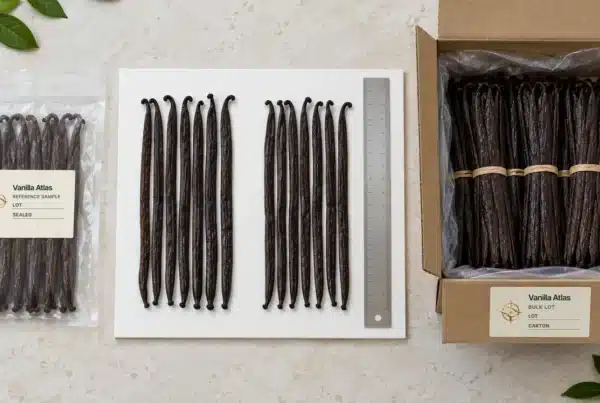
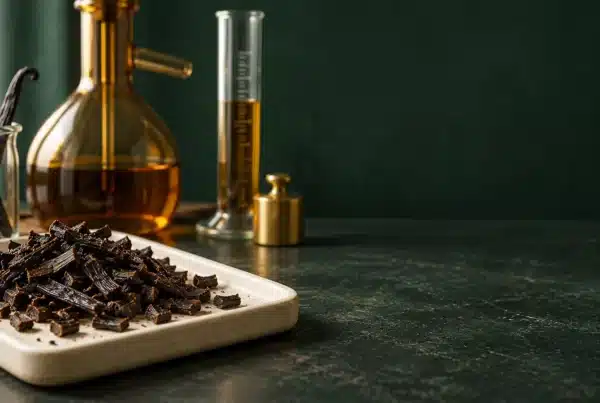
Choose supple whole vanilla beans for baking and ice cream when you want easily scraped seeds. For homemade extract, consider sound whole beans or shorter pieces that suit your method; long, attractive pods are less important than usable material and the flavor of the finished infusion.
Buying vanilla beans for baking and homemade extract starts with one question: what will you actually do with the pod? Scraping seeds into pastry cream, infusing a dairy base and making an alcohol-based extract are different jobs. The most expensive-looking bean is not automatically the most useful purchase.
This guide compares vanilla beans for baking, ice cream and extract through seven practical choices, followed by answers to common buying questions. The recommendations are editorial guidance supported by published kitchen methods and the current Vanilla Atlas product descriptions. They are not the results of a new side-by-side recipe test.
1. Choose the job before choosing the bean
When comparing vanilla beans for baking, separate appearance, preparation and flavor. You may value all three, but they do not always point to the same format.
| What you are making | A useful starting choice | Why it fits | What to check |
|---|---|---|---|
| Pastry cream, custard tart or crème brûlée | Supple whole pods that are easy to split | Convenient access to seeds; the casing can also be infused | Ease of scraping, aroma in the filling and any required straining |
| Vanilla ice cream | Whole pods for seeds and infusion, or sound pieces for a strained infusion | You can choose whether visible seeds are part of the presentation | Flavor in the finished frozen base and removal of casing pieces |
| Cake, biscuits or a baked filling | Beans that suit the recipe’s preparation, or an appropriate prepared vanilla product | A recipe without an infusion stage may be easier with extract or paste | Ingredients, recipe instructions, dose and total preparation cost |
| Homemade extract | Sound whole beans or suitable short pieces | Pod length has little presentation value inside a jar | Bean quantity, condition, alcohol volume and the complete method |
| A smooth sauce without flecks | A strained pod infusion or a suitable extract | Lets you manage appearance separately from aroma | Whether the finished liquid meets your visual and flavor goals |
When shopping for vanilla beans for baking, use this table as a starting point, rather than a grade ranking. If your recipe already specifies a vanilla format, begin with that instruction. Changing from extract to whole pods can change both the work involved and the result.
2. Pick vanilla beans for baking and pastry by how you will use the seeds
For pastry cream and pale desserts, choose vanilla beans for baking that you can split and scrape comfortably. A supple whole pod is a convenient starting point when visible seed specks are part of the finish.
The Nielsen-Massey kitchen FAQ describes splitting a pod, scraping the seed pulp and steeping both seeds and casing in a warm liquid. This makes an important buying point: the scraped-out casing is still useful for infusion. The seeds are not the only part worth considering.
Think about the filling rather than only the pastry shell. A fruit tart may have a baked shell and a separately prepared custard. In that case, select the vanilla for the custard’s preparation and serving conditions instead of treating everything on the plate as one baking process.
When a whole pod earns its place
Whole vanilla beans for baking make particular sense when your recipe includes a milk or cream infusion, you enjoy preparing the pod, and the seed-speckled appearance matters to you. A small custard tart is a different purchase decision from a large batch of strongly flavored chocolate biscuits.
For a smooth filling, decide whether you want the seeds to remain. A sieve used to remove pieces of casing will not necessarily remove every tiny seed. If a completely fleck-free appearance matters, choose the preparation and filtration accordingly.
Alternatives to whole vanilla beans for baking
You do not need to put whole pods into every cake or biscuit. If a recipe calls for extract and has no useful liquid-infusion stage, a suitable extract may save preparation time. Paste may offer visible specks, but check its ingredients and the maker’s substitution instructions.
There is no universal rule that one bean replaces a particular number of teaspoons. Bean size, condition and the concentration of the prepared product vary. Follow a recipe-specific substitution or run a small trial before changing a successful batch.
3. Choose vanilla for ice cream in the finished base
When buying vanilla beans for baking and ice cream together, decide what you want from each recipe: a familiar vanilla flavor, a particular aromatic character, visible seeds, or a smooth appearance. Then choose a format that fits your base recipe and equipment.
The L’École Valrhona kitchen summary distinguishes scraped-and-infused pods from cut-bean preparations and stresses the need to strain casing pieces. That is more useful than assuming that only a pristine whole pod can flavor a dairy base.
If visible seeds matter, a supple whole pod is easy to work with. If you want only an infusion that will be strained, suitable pieces may be practical. Keep the preparation consistent when comparing them: a carefully scraped whole pod and a few casually added fragments are not an equal test.
Judge the vanilla in the ice cream as you will serve it. The smell of the unopened bag or the warm base is not the final customer experience. Keep the recipe, dose, churning method and serving conditions the same, then record which sample you prefer.
For a small food business, this can be a simple two-candidate trial. Prepare one standard base, divide it accurately, and keep a note of the bean preparation used for each candidate. Assess appearance and flavor separately so a prettier finish does not silently decide the flavor result.
Our vanilla bean flavor profile chart explains why species, curing, lot and food base all matter. Use it to shortlist an aroma direction; use your own ice cream to make the choice.
4. Select beans for homemade extract without paying for appearance alone
For homemade extract, choose sound vanilla material that fits a complete home-extraction method. Whole pods, shorter beans and cut pieces can be candidates. None is guaranteed to produce the same strength merely because it carries an extraction-oriented name.
Dry beans are also different from used-up beans. A product intentionally sold in a dry format is not the same as a forgotten pod that has lost its characteristic aroma. Likewise, a previously infused casing is not equivalent to an unused bean in a measured comparison.
Before buying, decide how much extract you want to make and which method you will follow. Record the bean mass and liquid volume, rather than relying on the number of pods alone. Five small beans and five large beans may represent different quantities of material.
Set up a repeatable home project
The King Arthur Baking home-extract guide describes splitting or cutting pods, keeping them submerged in the chosen alcohol, sealing the container and allowing time for infusion in a cool, dark place. Use the complete method for its instructions rather than treating this selection guide as a full recipe.
Keep a short jar record: bean supplier and lot if available, unused or previously used material, bean weight, alcohol type and volume, and start date. That record makes a useful second batch possible. Without it, a successful jar is difficult to reproduce.
Do not assume a darker liquid is a measured concentration or that a homemade infusion is interchangeable with a commercial extract. Evaluate it in the recipe where you will use it. For a cake needed this weekend, choose an established ingredient instead of depending on a jar you have just started.
Whole beans or shorts for the jar?
When choosing vanilla beans for baking supplies that include an extract project, ask whether attractive length is worth paying for. A sound short format may be sensible if it fits the method, the quantity is appropriate and the finished infusion performs well.
5. Compare whole beans and shorts by preparation work
When selecting vanilla beans for baking, whole pods versus shorts is mainly a preparation decision. Short does not automatically mean exhausted, defective or flavorless. Whole does not automatically mean a better result in every recipe.
| Buying question | Whole pods | Short beans or cut pieces |
|---|---|---|
| Do I want to split and scrape each pod? | Usually easier to handle individually when supple | May be less convenient to scrape, depending on size and condition |
| Will I infuse and remove the casing? | Easy to keep track of individual pods | Plan how to contain or strain the pieces |
| Does intact appearance matter? | Useful when you value presentation or handling | Length matters less once the material is cut up |
| Am I making a home extract? | A possible choice; record the quantity used | A possible choice if suitable for the selected method |
| Can I buy by pod count? | Weight still varies between pods | Weight is particularly useful when pieces vary in size |
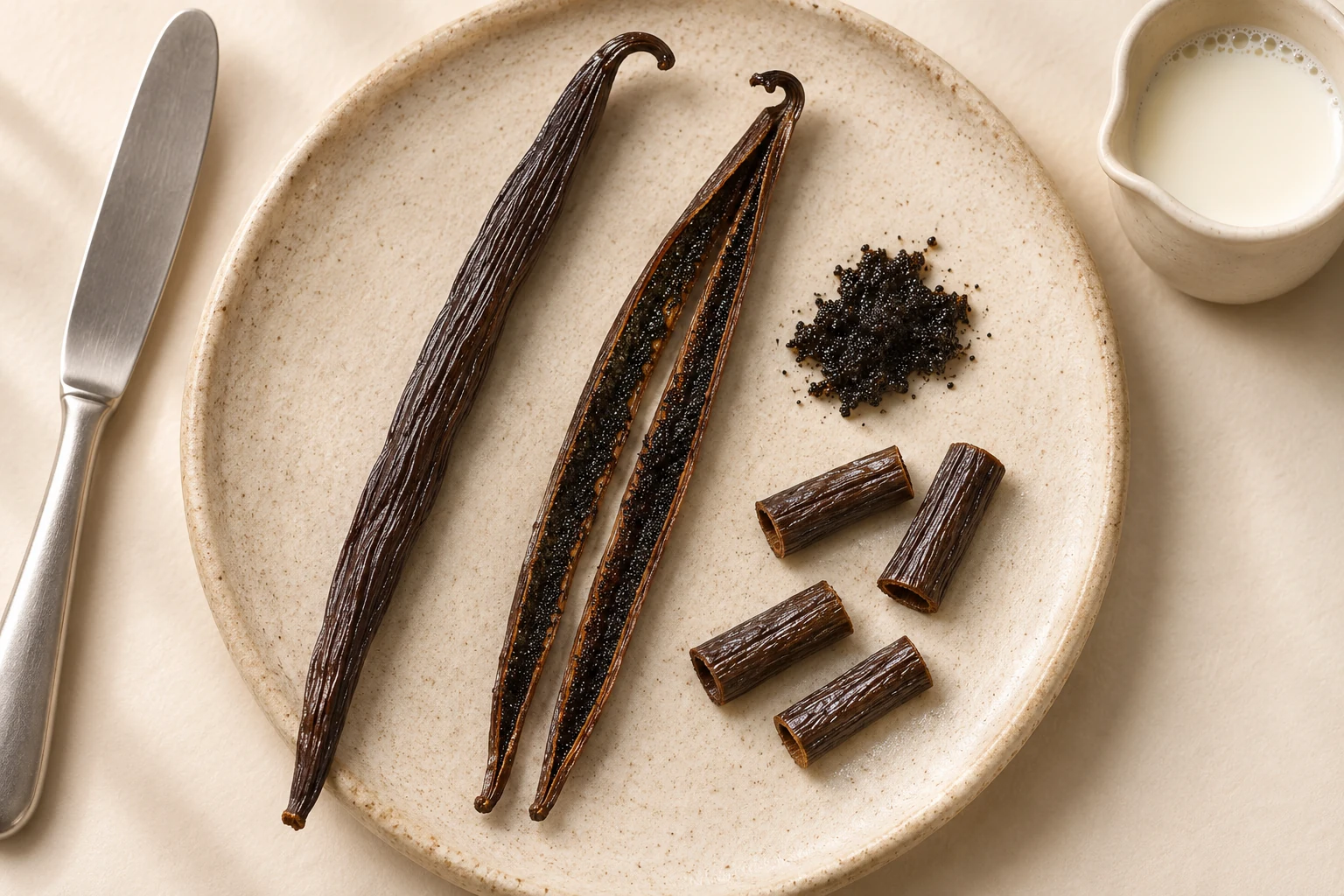
For vanilla beans for baking, convenience has a real value. Add the time needed to cut, scrape, steep and strain to the ingredient cost. A less expensive format that takes much longer to prepare can be the wrong choice during a busy pastry service.
Also consider what your tools can do. A whole, dry pod intended for processing may be awkward if your plan is to scrape soft seed pulp with a small knife. Check the stated format before ordering; the word “whole” describes its shape, not how supple it will be.
Your choice of vanilla beans for baking should reach the desired result with a sensible amount of preparation. Treat any claim that one format always produces a fixed amount more flavor as a question to verify, rather than a buying shortcut.
6. Compare vanilla beans for baking by grade, origin and lot
Grade names on vanilla beans for baking help describe an offer, but they are not universal culinary scores. A Grade A or gourmet label does not establish how much vanilla to add to your custard. A Grade B or extraction label does not make questionable material suitable for food.
Read the vanilla bean grades guide for the distinction between trade shorthand and formal categories. For this kitchen decision, compare vanilla beans for baking by format, handling, aroma and performance in your recipe.
The same restraint applies to origin. Choose vanilla beans for baking by the flavor you want and the sample you can evaluate. A country name alone cannot guarantee that you will prefer one lot in pastry and another in ice cream.
Ask the seller a few specific questions: What is the species? Are these supple whole pods, dry whole pods, or shorts? What pack size will arrive? Is the description a reference specification, or is a particular result measured for the current batch?
On your first order of vanilla beans for baking, check the material before committing it to an important recipe. If its condition is questionable, contact the seller and resolve that question before use. Cutting it up, infusing it in cream or placing it in alcohol is not a way to turn an unsuitable ingredient into an acceptable one.
You can compare vanilla beans for baking with a small, controlled kitchen trial rather than a complicated scoring exercise. Keep one familiar recipe, record the quantity, and change only the vanilla candidate first. Test a different dose separately if you need to.
7. Buy vanilla beans for baking in a quantity you can use
Start with a realistic use plan. A home baker making occasional custard and one jar of extract has a different need from a pastry kitchen making several batches each week. Buy vanilla beans for baking around that demand, including how you will handle the opened pack.
As checked on 9 November 2026, the five Vanilla Atlas listings below each sell a 1 kg unit. Do not assume that a listing offers a one-pod pack, a small home-extract kit or a smaller retail size. Contact us to ask about your required quantity; smaller-pack availability is not promised here.
| Current selection | Published product description | A practical starting use to consider |
|---|---|---|
| Gourmet Vanilla Beans | Plump, supple beans with a strong aroma | Fine pastry, desserts and ice cream where handling and seeds matter |
| Select Vanilla Beans | Plump, supple beans with a strong aroma and an oily surface | A candidate for dairy, confectionery or extract trials |
| Classic Vanilla Beans | Supple, oily whole beans with a mild aroma | A candidate for bakery preparations, syrups or extract trials |
| Dry Whole Vanilla Beans | Whole, dry beans intended for milling and food processing | Consider when your preparation suits a dry processing format |
| Vanilla Bean Shorts | Short, dry beans under 10 cm, with some cut pieces | Consider processing or flavoring work where intact pod length matters less |
This table connects the published descriptions to possible kitchen trials. It does not establish comparative flavor strength, extraction yield or a guaranteed dose. The specifications on the product pages are reference values, not batch test results; confirm current information before ordering.
Calculate ingredient cost per batch
Compare vanilla beans for baking using the quantity a recipe actually consumes. Ingredient cost per batch = delivered cost per gram × grams used. Include shipping in the delivered cost if you are comparing offers. Count preparation time separately instead of hiding it in a vague “premium” judgement.
For an illustration only, a delivered cost of US$0.20 per gram and a 5 g dose would mean US$1.00 of beans per batch. Those are hypothetical numbers, not a Vanilla Atlas price or a recommended recipe dose. This calculation helps compare vanilla beans for baking without assuming that every pod has the same weight.
If you are unsure which selection to trial, tell us what you are making. Include the recipe or process, whether seeds should be visible, your approximate use rate, destination and required quantity. Those details make a useful recommendation possible. You can also compare our vanilla beans for baking against the preparation you have chosen.
Frequently asked questions
Which vanilla beans are best for pastry cream?
Supple whole vanilla beans for baking are a practical starting choice because they are convenient to split and scrape. Use the seeds and casing as your recipe directs, removing casing pieces before serving. Choose by the flavor of the finished cream and the preparation involved, rather than the grade name alone.
Should I use whole beans or shorts for ice cream?
Choose whole pods if easily scraped seeds and handling convenience matter. Suitable shorts may work for a strained infusion when intact length is unimportant. Compare the formats in the same base at a measured quantity, and ensure casing pieces are removed as the recipe requires.
Can I use Grade A beans for homemade extract?
Yes, sound beans sold as Grade A or gourmet can be used in a suitable home-extract method. You may be paying for appearance and handling advantages that matter less in a jar. Compare the actual format, quantity and finished result rather than assuming a grade label guarantees strength.
Are Grade B beans always better for extract?
No. Grade B is trade shorthand, not a universal promise of extraction performance. Ask what the seller means by it and check the material’s condition and suitability for your method. Sound shorts, dry whole beans and supple whole beans should be assessed on their actual characteristics.
How many vanilla beans do I need for homemade extract?
Use the quantities in a complete home-extract method and record bean weight as well as liquid volume. Pod sizes vary, so a bean count alone is a weak basis for comparing purchases. Do not infer a commercial extract’s concentration from the color or age of a homemade jar.
Can one vanilla bean replace one teaspoon of extract?
There is no universal one-pod-to-one-teaspoon conversion. Beans differ in size and character, and prepared extracts differ in concentration. Follow the recipe or the prepared product’s substitution guidance. If neither provides an appropriate conversion, test a small batch before replacing a known successful ingredient.
Can I use previously scraped pods in a new project?
A scraped casing can still be useful, but distinguish a freshly scraped unused casing from one already infused in another food. Previous use changes what you are comparing. Follow appropriate handling for the preparation and do not count used material as equivalent to unused beans in a measured recipe.
Should a home baker buy a kilogram of vanilla beans?
Buy vanilla beans for baking in kilogram packs only when the quantity fits a realistic use and storage plan. The current Vanilla Atlas listings are 1 kg units, which may suit regular users better than an occasional home project. Check the pack size before checkout and ask about your required quantity without assuming smaller packs are available.
Sources and buying notes
Reviewed 9 November 2026. This is a buying and application guide, not a complete ice-cream, pastry or extract recipe. No new comparative kitchen test was conducted for it.
- Nielsen-Massey: kitchen and product FAQ — used for the basic split, scrape and steep technique, not as evidence for Vanilla Atlas product performance.
- L’École Valrhona: Using vanilla in the kitchen — distinguishes pod preparation methods and the need to remove casing pieces; the manufacturer’s instructions concern its own range.
- Kye Ameden, King Arthur Baking: How to make vanilla extract — a home method for readers to consult in full; no universal concentration or shelf-life guarantee is adopted here.
- Vanilla Atlas product pages linked in the selection table — checked for published descriptions and 1 kg unit sizes on the review date. Check the current listing and batch information before purchase.