
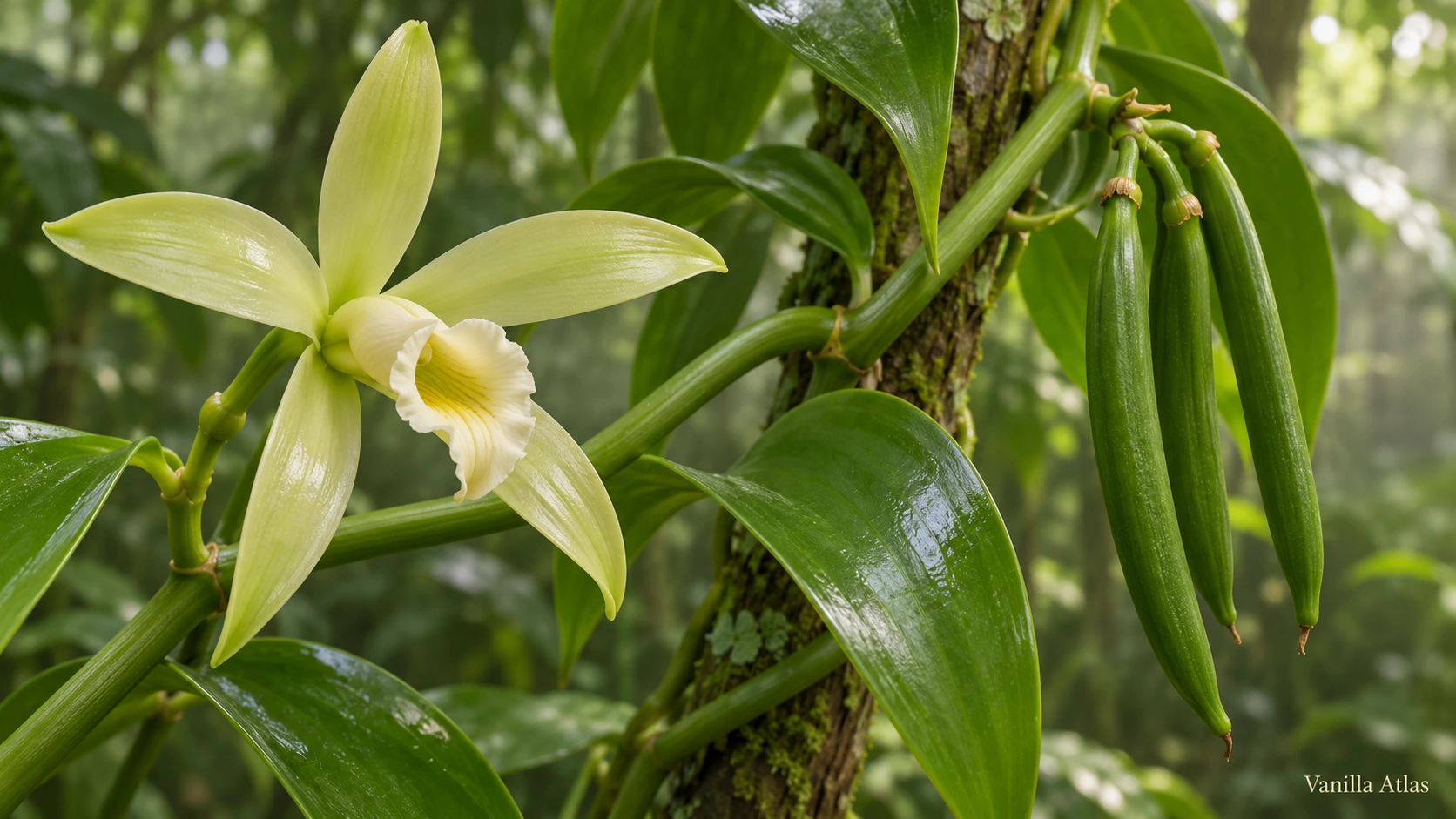
How is vanilla cured? In a widely used Indonesian process, curers wilt mature green pods, keep them warm for sweating, reduce their moisture through controlled drying, and rest them during conditioning. Graders then sort the cured beans by characteristics such as length, splits, moisture and aroma. The work starts months earlier, when a grower pollinates a short-lived orchid flower by hand.
Run a knife along a supple vanilla bean and the seam opens onto a dark, fragrant paste of tiny seeds. The grower who harvested that same fruit saw a firm green capsule with little of the scent you recognize in a custard. Three decisions connect those two moments: when to pick, how to cure, and which finished pods to pack together. Each matters for a different reason when you buy vanilla.
Why do growers pollinate vanilla flowers by hand?
A Vanilla planifolia flower has both male and female structures, but a thin flap called the rostellum separates the pollen from the surface that receives it. A grower lifts the flap with a slender tool and gently brings the pollen into contact with the stigma. Successful vanilla hand pollination allows the ovary behind that flower to grow into a pod. The University of Florida’s illustrated growing guide shows the flower and its short flowering window.
A single flower usually lasts only one day. A cluster opens over time, so a grower returns to the vine as new flowers appear. This is the first reason vanilla takes so much labor. A worker can pick a cluster of ripe grapes in a single cut. On a vanilla vine, each future pod starts with attention to one open flower.
What does this tell a shopper? The phrase “hand-pollinated” explains real work, but it does not tell you how a finished bean will taste. Pollination sets the fruit. The months on the vine determine what the fruit brings to the curing room, and the cure determines how much of that potential reaches your kitchen.
When is Indonesian vanilla ready to harvest?
Indonesian agricultural guidance puts the usual harvest window around eight to nine months after pollination. Growers look for a fading green color and the first yellowing at the tip while the pod is still intact. Those months describe fruit development on the vine. Add the curing period separately when estimating the journey from flower to finished vanilla. See the Indonesian Ministry of Agriculture’s vanilla cultivation and harvest guide.
A pod can reach an impressive length while still short of aromatic maturity. Green fruit accumulates compounds that will contribute to the cured aroma. Picking early limits what the curer has to work with. Waiting too long also has a cost: the pod can split along its seam, changing which whole-bean specification it can meet. This is why a grower may select pods on more than one visit.
In a study covering producers in seven Indonesian provinces, Munarso and colleagues documented early harvests under theft and economic pressure. They also recorded differences in postharvest handling among growers and exporters. For a buyer comparing Indonesian vanilla, “What maturity signs were used for this harvest?” is a more informative question than asking for a calendar month alone. Read the Indonesian field study and its processing comparison in Table 5.
How is vanilla cured after harvest? The four stages
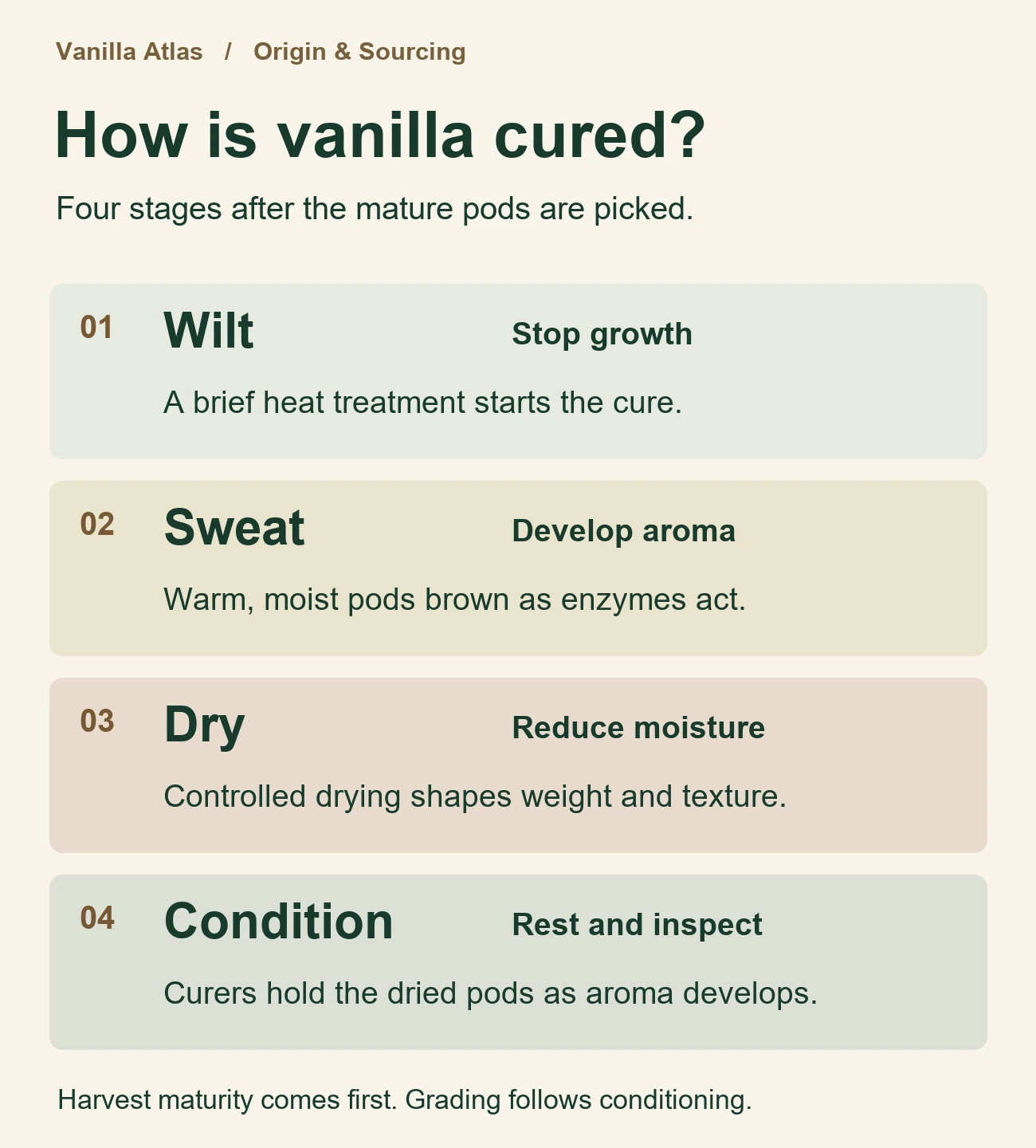
The vanilla curing process combines heat, moisture loss and rest. An Indonesian processor may alternate sweating and drying during part of the cure. Read the sequence below as four jobs the curer must accomplish. The exact schedule depends on the method, weather, pod size and finished specification.
1. Wilt the green pods
Wilting, also called killing or blanching, stops the harvested pod from continuing its normal growth. Hot-water treatment is one documented Indonesian approach. Heat disrupts the tissues, allowing enzymes and compounds that were separated inside the green pod to interact. The word “killing” refers to the plant tissue. It does not certify a lot as sterile.
If you are reviewing a supplier description, ask what treatment was used and whether different pod sizes were handled separately. A statement such as “hot-water blanched” gives you one piece of the method. You still need to know how the pods were sweated, dried and conditioned to understand the finished vanilla beans.
2. Sweat the warm pods
During sweating, curers hold warm pods together, often under insulation, to retain heat and moisture. The pods darken and characteristic vanilla aromas begin to emerge. One important change is the release of vanillin from glucovanillin, a precursor present in mature green fruit. Vanillin contributes a familiar sweet vanilla note. Other aroma compounds help explain why two vanilla beans with similar vanillin results can smell different.
Some accounts call this stage fermentation. For a customer, the clearest questions are what “sweating” meant for that processor and how the endpoint was judged. A photograph of dark pods under a covering cannot establish the time, temperature or finished flavor of the lot being offered.
3. Dry the pods in a controlled way
Vanilla sweating and drying serve different purposes. Sweating keeps the fruit warm and moist while changes in aroma proceed. Drying allows water to leave. As the pods lose weight, they wrinkle and their handling characteristics change. Producers may combine sun exposure with sheltered drying or use other arrangements adapted to their conditions.
Drying decisions show up on a cutting board. A supple whole bean may open neatly under the tip of a knife. A drier pod can resist the same motion or break into pieces. For a pastry chef who needs to scrape seeds into a pale custard, that difference costs prep time. For a maker who cuts and weighs pods for extraction, ease of scraping may matter much less.
4. Condition the dried beans
Conditioning is a period of rest and inspection after active drying. Moisture can redistribute within the beans and their aroma continues to develop. Depending on the method, this part can extend the production timeline by weeks or months. A drying date and a release date therefore answer different questions.
For a repeat purchase, ask whether the reference sample came from the conditioned lot available for sale. A sample pulled partway through the vanilla curing process may have a different feel or aroma from the finished batch. Keep the lot reference with your tasting notes so you know what you approved.
Watch the journey from flower to finished vanilla
Read the 24-second video transcript
A grower transfers pollen while the flower is open. A yellowing pod tip can signal harvest readiness around eight to nine months later. Heat starts the cure, sweating helps aroma develop, and drying removes water. The dried pods rest through conditioning. Graders and buyers then compare aroma, moisture, length and splits.
Do all Indonesian producers use the same vanilla curing process?
No. In the Indonesian field study, producers reported differences in sorting, hot-water treatment and drying schedules. Even when two descriptions use the same four stage names, they can refer to different equipment and handling choices. Treat the country of origin as a starting point for asking about a lot. A regional name by itself cannot establish a smoky note, a particular drying method or a guaranteed vanillin level.
For example, if a seller describes a sample as smoky, ask whether the word describes a tasting impression or a documented exposure during processing. Those are different kinds of evidence. In a light vanilla ice cream, even a modest roasted note may be obvious. In a chocolate filling, it may work well. Try the sample in the food you actually intend to sell. Our vanilla bean flavor profile chart gives you a vocabulary for recording that comparison.
How are vanilla beans graded once the cure is complete?
Grading groups finished beans against a specification. Assessors can separate whole and split pods, measure length, inspect visible damage, evaluate aroma and check moisture against the agreed range. Ask a supplier to define terms such as “gourmet,” “Grade A” or “extraction grade” in writing. The name alone does not give you a moisture result or a permitted proportion of splits. For a fuller comparison of trade labels and formal categories, see our guide to vanilla bean grades.
| Feature | What it helps you decide | What to ask or try |
|---|---|---|
| Length and intact shape | Do the pods fit the retail tube or presentation? | Ask for the length range and share of whole pods. |
| Flexibility and seeds | How easily can the pastry team scrape a pod? | Split a representative bean with your usual knife. |
| Moisture | How much water is included in the quoted weight? | Request a lot-specific result, test method and reporting basis. |
| Aroma in the recipe | Will this lot suit the customer’s food? | Compare equal weights in identical small batches of your base. |
| Splits and short pieces | Is intact appearance worth paying for? | Agree what is acceptable for the application before ordering. |
A clean split changes appearance and sometimes handling, yet a sound split pod can still contribute aroma to an infusion. Visible mold or an unexplained off-odor is a separate issue. Set a suspect sample aside and ask the supplier about it before using it in a tasting. A lower commercial grade should never serve as a catch-all description for a condition you cannot identify.
Why does curing quality affect the price of vanilla beans?
Hand pollination and selective harvest create labor costs before a single pod reaches the curing room. The processor then handles the pods repeatedly, loses saleable weight as water leaves, and holds stock through conditioning. Sorting can reduce the volume that qualifies for a particular whole-bean order. A seller offering uniform long, intact pods has selected for features that some customers specifically need.
Which features are worth paying for depends on the job. A shop packing one handsome bean in each glass tube has a reason to specify length. A bakery weighing pieces into a cream infusion might get better value from shorter sound pods with the preferred aroma. A higher price can reflect sorting and presentation as well as curing quality. Ask which part of the specification explains the difference.
A worked buying example. Suppose two one-kilogram offers have verified moisture results of 30% and 20% on a wet-weight basis. They contain 700 g and 800 g of dry matter respectively. At the same price per kilogram, the drier lot costs less per kilogram of dry matter. That calculation says nothing by itself about aroma yield or how easily the pods scrape. Use it alongside a recipe trial or an extraction test. These figures illustrate the comparison and are independent of any Vanilla Atlas lot.
How can you choose a cured bean for your kitchen or business?
At home, start with the recipe. For vanilla-speckled pastry cream, choose a sound whole bean that opens easily and has an aroma you enjoy. If the bean will steep in liquid, an intact display-grade pod may offer little extra value. For specific applications, compare vanilla beans for pastry, ice cream and homemade extract.
In a professional kitchen, compare applications by weight. Prepare two small batches of the same base, using the same weight of beans and the same infusion conditions. Mark them with neutral codes and taste at serving temperature. Record aroma, ease of prep and usable quantity. Using “one bean” in each batch can obscure the result if one pod weighs twice as much as the other.
For an import order, connect the sample to the shipment. Ask for the botanical name, origin, lot reference, available curing information, moisture result and grade tolerances. Specify whether you need whole pods, accept splits, or will process pieces. Keep a record of the approved sample and ask how it represents the offered lot. You can then compare quotations on the attributes that matter to your customer.
Two samples, one decision: which vanilla beans would you reorder?
Imagine a chef choosing Indonesian vanilla for a custard tart. Sample A has long, glossy, intact pods. Sample B contains shorter vanilla beans and a few clean splits. The supplier’s price per kilogram is lower for B. Before giving A the display case or B the kitchen order, decide what the finished tart needs. The relevant questions are how readily the seeds scrape out and which sample tastes better after baking and chilling.
Weigh the same amount of each sample, prepare each one the same way and record how long the work takes. A shorter pod that opens cleanly can be quicker to handle than a longer one with a tough seam. Keep the pastry shells, custard base, resting time and serving temperature the same. Taste the tarts without looking at the sample labels. Write down one observation you could test again, such as a clear vanilla aroma after chilling or a woody aftertaste in the finished custard.
Now compare the retail buyer’s decision. If the contract calls for intact vanilla beans that fill a glass tube, measure several pods from each representative sample. A delicious sample can still miss a length specification. Ask how the supplier sorts the offered lot and whether the quoted tolerance applies by count or by weight. Keep the preferred kitchen sample separate from the display reference if the two buyers choose different lots.
Finally, translate the result into a request the seller can fulfill. For the chef, record the sample code, recipe dose and aroma you want to repeat. For the retail order, record length, intact condition and pack dimensions. For both, keep the lot-specific moisture result and ask about changes in harvest or curing since the previous order. A shared country name can cover many batches of Indonesian vanilla. These notes give the next delivery a fair comparison with the vanilla beans that earned the order.
Shop Vanilla Atlas beans for your application, or join the Vanilla Atlas newsletter for more origin and buying guides.
Frequently asked questions about Indonesian vanilla
How is vanilla cured in Indonesia?
A common sequence is wilting, sweating, drying and conditioning. Individual processors vary the treatment and timing. The finished beans are then sorted to a grade or buyer specification.
How long does it take from flower to cured vanilla bean?
Indonesian guidance places harvest around eight to nine months after pollination. Curing and conditioning add further time, often weeks to months. Ask the seller for harvest and release dates when the timeline matters.
Why doesn’t a green vanilla pod smell like a cured bean?
A mature green pod contains aroma precursors, including glucovanillin. During curing, enzymes help release vanillin and the aroma profile develops as the pods sweat, dry and condition.
Does darker vanilla mean better vanilla?
Color alone cannot establish maturity, moisture, aroma or suitability for your recipe. Check the lot specification and compare representative samples in the same preparation.
Is a split vanilla bean worth buying?
A sound split bean may suit a weighed infusion or extraction. For retail display or a recipe that needs easily scraped whole pods, check how much splitting the supplier allows and test a sample.


